On this page, you can discover how KeyPro puts circularity into practice. We show how furniture can last longer, be reused and contribute to smarter furnishing solutions for homes and projects.
You’ll also discover why renting is a natural fit for a circular approach. From reuse and maintenance to temporary furnishing and complete project interiors. This is how we make circularity practical. Without the hassle.
In our industry, circularity is about more than choosing a sustainable product. It covers the entire lifecycle. From selection and use to maintenance, transport and the product’s next destination.
Our approach is based on three practical principles:
These principles also shape the way we approach furnishing. For us, circular furnishing means creating a home or space in a way that allows furniture and materials to retain their value for as long as possible. This is why the market is increasingly shifting from ownership to use.

Around 10 million tonnes of furniture are discarded in the European Union every year, according to the European Commission. In the 2025 European working plan for sustainable products, furniture therefore ranks second among the product groups being prioritised for action.
According to the European Commission, a significant part of furniture’s environmental impact occurs during production and the extraction and processing of materials. This contributes to climate change, acidification, water pollution and waste.
By using furniture for longer and putting it back into use, fewer new products are needed and existing furniture is less likely to become waste. Renting makes this approach practical.
For long-term, permanent interiors, buying may be the right choice. But if the period of use is temporary or uncertain, renting furniture is often the smarter circular option.
At KeyPro, we make circularity a practical part of the entire process.
We don’t just think about what is needed today. We also consider what can happen next. This helps furniture retain its value and makes reuse an integral part of the solution.
We choose quality that lasts. Furniture needs to be practical, remain presentable and withstand intensive use. That creates the foundation for smart reuse.
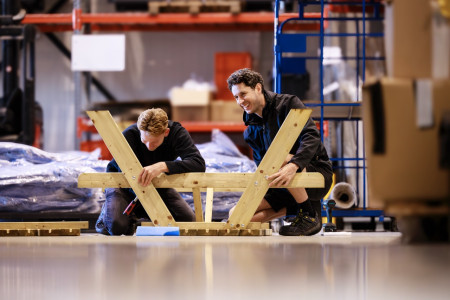
We focus on maintenance and repair. Furniture that is still in good condition does not need to be replaced. Smart maintenance extends its lifespan and helps prevent unnecessary waste.
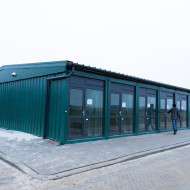
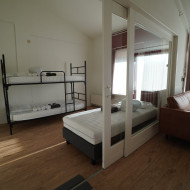
We combine circularity with flexibility. Our approach is particularly well suited to temporary housing and projects. You can scale up or down whenever necessary, without committing to unnecessary purchases.
And we take care of the entire process. From selecting and putting together the right furnishings to delivery, installation and what comes next. This makes circularity practical and achievable.

Circular furniture works best when there is a complete process behind it. That’s why KeyPro does more than simply deliver furniture. We think along with you, furnish the space and make sure everything is in the right place at the right time.
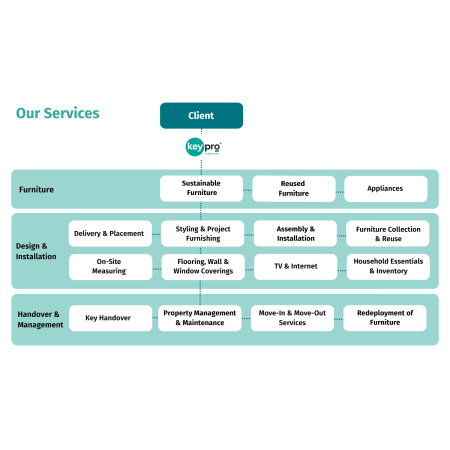
We provide sustainable furniture, reused furniture and appliances. We also take care of the practical side of the project. This includes measuring, delivery and placement, styling, assembly and installation. Where required, we can also arrange flooring, wall and window coverings, TV and internet, as well as inventory and household essentials.
Our involvement doesn’t stop once the project is completed. We can assist with key handovers, management and maintenance, move-ins and move-outs. When furniture is no longer needed, we take it back and determine how it can be put to use again.
This is how we make circular furnishing easy. You have one point of contact. We make sure everything is taken care of.

With multiple locations, we can redeploy furniture faster, plan transport more efficiently and reduce unnecessary storage.
Our certifications and working methods make sustainable and circular furnishing measurable and reliable.
We work with partners who value reuse, repair and smart use of materials just as much as we do.
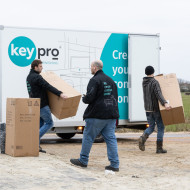
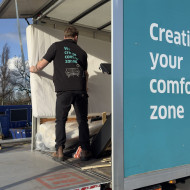
With our own transport operation, we can respond quickly when furniture needs to be collected, delivered or relocated.
Circularity becomes truly meaningful when you can see it working in practice. In solutions that are already making a difference today.
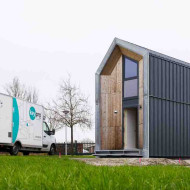
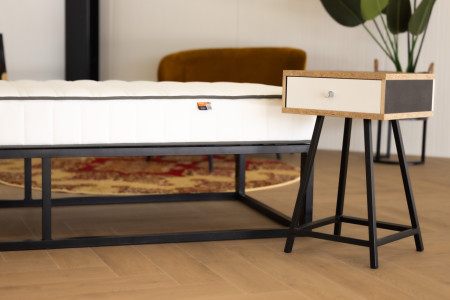
A great example is the bedside table developed as part of the Koploper project at Euvelgunne in Groningen. Together with our partners, we created a circular supply chain that gives local residual streams of wood and plastic a new purpose. The result is a stylish bedside table made from materials that would otherwise have been discarded.
The same approach can be seen in our circular mattress from Auping. Since December 2025, it has been available to rent exclusively through KeyPro as the first fully circular mattress in the furniture rental industry. It is made from mono-polyester and steel, without foam or glue. This makes it fully recyclable, with the materials capable of being reused up to eight times to create a new mattress.
Step by step, circularity is evolving from individual products into an increasingly complete circular offering.

Global demand for raw materials has tripled since 1970. If this growth continues, global resource use is expected to double again by 2060. This puts increasing pressure on the environment and on the way we produce, procure and furnish spaces.
That is exactly why circularity matters. Not simply as an ambition for the future, but as a practical choice we can make today. Waste less. Use products for longer. Make smarter use of what is already available. And think more carefully about what is actually needed.
The Netherlands has also set clear ambitions in this area. The goal is to achieve a fully circular economy by 2050, with an interim target of reducing the use of primary raw materials by 50% by 2030.
Achieving that requires more than policy. It requires choices we can start making today.

Circular furniture is designed to stay in use for longer. It can be reused, repaired or recycled, keeping raw materials in circulation for longer and reducing waste.
Sustainable furniture is often produced with careful consideration for materials and manufacturing methods. Circular furniture goes a step further by also considering reuse, repair, disassembly and recycling throughout its lifecycle.
Furniture requires significant amounts of raw materials. By using furniture for longer and putting it back into use, we can reduce waste and make better use of the materials already available.
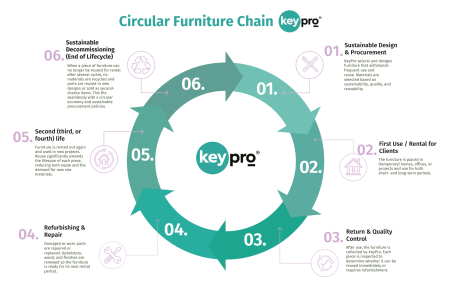
Yes. Furniture rental is a natural fit for a circular economy. You use the furniture for as long as you need it. Afterwards, it is collected, inspected and prepared for reuse.
Furniture rental allows the same products to be used multiple times. This reduces the need for new furniture and helps save raw materials while reducing waste.
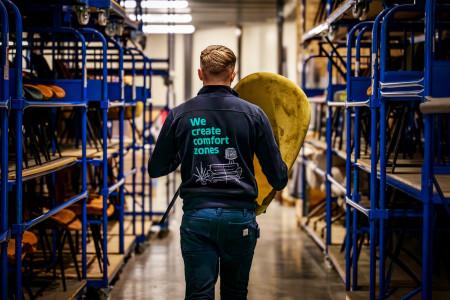
KeyPro collects the furniture. We then inspect and clean it before preparing it for its next use. If an item can no longer be used in its current condition, we look at options for repair, parts recovery or recycling.
Not necessarily. Particularly for temporary furnishing, renting can be the smarter option. You pay for the period in which you use the furniture, rather than taking on ownership, storage, maintenance and disposal.
KeyPro provides circular furniture solutions for both temporary and permanent furnishing projects. After use, we collect the furniture and put it back into circulation wherever possible.
Circular furniture is ideal for organisations that want to furnish spaces quickly, flexibly and responsibly. This includes housing associations, municipalities, property companies, estate agents and organisations providing temporary accommodation.
Yes. Circular furniture rental is particularly well suited to temporary accommodation. It provides flexibility during the period the furniture is needed, after which it can be reused at another location.
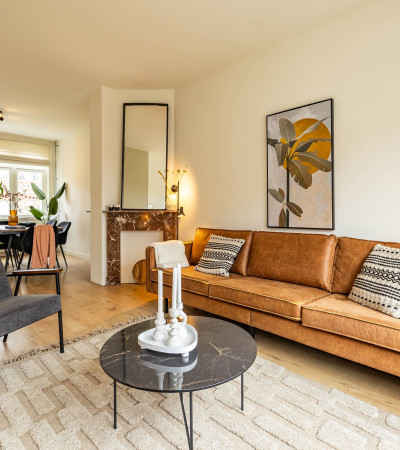
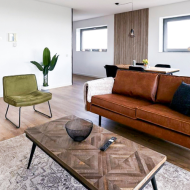
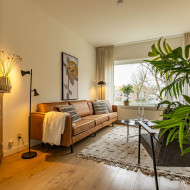
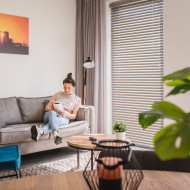
Absolutely. Circular interiors can be stylish, welcoming and professional. Choosing circular furniture doesn’t mean compromising on appearance. It means creating a space that works while making smarter use of resources.
Circular procurement means looking beyond the initial purchase price. It also considers lifespan, reuse, maintenance, take-back options and waste reduction.
Include circularity from the beginning of the procurement process. Ask suppliers about reuse, maintenance, return logistics and what happens to the furniture after its period of use.
Start with three questions: What do you need? How long do you need it for? And what should happen afterwards?
From there, you can determine whether renting, reuse or a combination of both is the best solution.